Mostrar mensagens com a etiqueta Asbestos. Mostrar todas as mensagens

Swedish Mesothelioma Rates Unaffected By Asbestos Ban

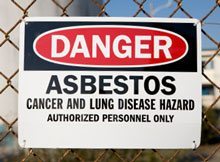
1885229_asbestos-signThe asbestos ban instituted in Sweden more than 30 years ago had still not had any measurable impact on the incidence ofmalignant mesothelioma in the country as of 2009.
That is the conclusion reached by researchers at Sweden’s Institute of Environmental Medicine at the Karolinska Institutein Stockholm who just completed a major study of asbestos exposure and mesothelioma in Sweden. The group also found that plumbers were at especially high risk for mesothelioma.

Designing a Mesothelioma Research Study

Mesothelioma incidence data was gathered from the Swedish component of the 2009 Nordic Occupational Cancer Study, which included 6.78 million people, as well as the Swedish Cancer Registry and the Swedish Total Population Registry.
The population data was divided into three periods between 1961 and 2009 and then linked to a matrix of likely exposures to carcinogens on the job.
Asbestos, a naturally-occurring mineral which was used for decades as an insulator and building product additive, is the primary carcinogen linked to mesothelioma diagnosis.

Mesothelioma Incidence in Sweden

The team identified 3,716 cases of malignant mesothelioma in Sweden during the study period. Eighty-nine percent of the cases occurred in men. Of the 280 occupations analyzed, 24 of them were red-flagged as potentially increasing the risk for mesothelioma.
“Among men, increased risks of mesothelioma of the pleura were observed in male-dominated occupations, with the greatest elevation of risk among plumbers,” writes Nils Plato, a Chemical Engineer with the Institute of Environmental Medicine.
In women, occupations with increased mesothelioma risk included sewing, canning, packing, cleaning and postal work. (Among the canners and cleaners, the risk existed, even though there was no evidence of asbestos exposure, suggesting that these women may have been exposed elsewhere.)

The Asbestos Ban and Mesothelioma Cases

But perhaps the most sobering news to come out of the Swedish study was the fact that, even though asbestos was banned in Sweden in 1982, the numbers of people being diagnosed with mesothelioma has not decreased.
“The asbestos ban of 1982 has yet to show any clear effect on the occurrence of mesothelioma in this cohort,” concludes the report in Epidemiology and Health.
The problem is mesothelioma’s long latency period, or the length of time between exposure to a carcinogen and disease development. Mesothelioma has one of the longest latency periods of any cancer, taking as long as 50 years after asbestos exposure for symptoms to occur.
The result is that many of today’s Swedish mesothelioma patients were exposed to asbestosdecades before the country put the ban into place.
Sweden is one of 58 countries that have banned asbestos. Although the US places strict regulations on the handling and disposal of asbestos, the toxin has not been banned.
Source:
Plato, N, et al, “Occupations and mesothelioma in Sweden: updated incidence in men and women in the 27 years after the asbestos ban”, September 20, 2016, Epidemiology and Health, eCollection 2016

Posted in , , | Leave a comment

5 Places Asbestos is Hiding in Your Home

 Thinking of getting wrist deep in a home DIY project you saw on Pinterest? Still using an ancient appliance from your first apartment because it seems to be just as good as new? While many of us may have an “if it ain’t broke, don’t fix it” attitude, some of your best money saving ideas can pose a serious health risk. Within your home and other unexpected places like schools and appliances, asbestos, a carcinogen known to cause asbestosis and mesothelioma, can linger.

Asbestos was once used in more than 3,000 consumer products. As a well-known fire resistant and durable product, asbestos use was heavily regulated in the late 1970s after it was discovered to cause cancer. However, many buildings and products may still contain asbestos; here are 5 shocking places where asbestos can be found in your home:


If you’re using a crock pot handed down to you from who-knows-where, you may want to consider replacing it with a new model. Prior to regulations, crock pots used in the lining between the outer and inner pot to retain heat, as well as in the power cord to prevent electrical fires. Chrysotile, or white asbestos, was the most common of the six types of asbestos used in appliances. While exposure to chrysotile asbestos is less likely to cause cancer, it is still a toxic substance.


Around the late 1970s when asbestos was being regulated, a consumer report showed that many hair dryers manufactured domestically were emitting asbestos fibers. While at the time U.S. manufacturers agreed to discontinue the use of asbestos in their products, the manufacturing of almost all hair dryers has been outsourced to foreign manufacturers where the environmental regulations on asbestos are few or non-existent.


Another common household appliance that was found to contain asbestos is the popcorn popper. The devices use an electrical element that heats the air to pop the popcorn and, for some manufacturers, asbestos was used in the electrical element. Much like crock pots, asbestos may have also been used in the power cords as a heat insulator. Similar to hair dryers, popcorn poppers manufactured overseas could potentially still contain traces of asbestos in their product.


Baby powder contains talc. Talc is a mineral that is mined around the U.S. and was often found to have the presence of tremolite asbestos within it. While many domestic manufacturers have taken safety measures to prevent levels of tremolite in their mined talc to later be used for cosmetic products, foreign manufacturers tend to have less environmental regulations on asbestos use and allow contaminated products to enter the country.


When it comes to taking on a new DIY project at home, consider the age of your home if you’re pulling down sheetrock, lifting flooring, or removing a popcorn ceiling texture. Many older building materials contained asbestos for its durability. With asbestos fibers put into these products, the materials would last much longer. However, today with the link to mesothelioma cancer, a homeowner should consult the advice of a professional contractor or asbestos abatement company before potentially exposing oneself to this dangerous carcinogen during a renovation project.


There are many other places throughout your home where asbestos can be found hiding. Be sure to consider the year of your home or appliance that you’re inspecting for asbestos-containing parts, as well as where the materials were manufactured. Limiting your exposure risk to asbestos in your home can help prevent the chances of you or a loved one developing an asbestos-related disease later on in life.

Posted in , , | Leave a comment

Worrisome Asbestos Discovery at Wapato School

Asbestos, even in small amounts, can cause a wide variety of diseases including multiple forms of cancer and even mesothelioma.  That’s why certain parties are so concerned about a demolition/renovation project at a Wapato High School in Washington.


A local news station recently reported that the school currently undergoing renovation was discovered to contain asbestos materials.  The revelation will effectively slow the project down and extend it well into the school year, something school board officials had hoped to avoid.  Now, with students and demolition debris on-site together, some are worried that the community’s children are being put at too high a risk.


The project at Wapato High School was scheduled to wrap up long before students came back to class.  That would have given crews plenty of time to clean up debris and put the finishing touches on the new construction.  However, asbestos remediation can be a time consuming process.  Because asbestos is so dangerous, federal regulations dictate exactly how it must be handled.  Licensed contractors must be called in to remove asbestos in any public or commercial building.  These materials must be delicately handled, packaged securely, and delivered to approved disposal facilities in order to mitigate any danger from the toxic minerals within.


Dan Murray, Wapato Schools Assistant Superintendent, said that student and faculty safety was top priority and he and others were working hard to ensure that “the student safety issues, staff safety issues, are all up to city codes,” and that “…we’re really struggling …” with traffic flow in order to keep kids and faculty away from potentially hazardous work site conditions.


Scrupulous contractors can easily keep living and work areas separated from construction zones containing asbestos.  Double airlock systems, secure transportation containers, ventilation devices and sealed vacuums can all be used – depending on the amount and type of asbestos materials – in order to keep students safe.  You can bet that officials will be watching this remediation project closely to ensure that nothing slips past their scrutiny.


The Wapato case illustrates the hidden danger that exists in schools today all across the country.  These older buildings were constructed when asbestos was a common additive to hundreds of individual construction materials.  Unfortunately, school districts simply don’t have the money or the resources to remove potentially hazardous materials.  They are often forced to manage asbestos in-place and do what they can to keep it from contaminating the school’s air supply.

Posted in , , , , | Leave a comment

Canada Finally Stops Defending Asbestos Mining

After several decades of criticism from the international community, the Canadian government is finally stopping its unconscionable defense of the asbestos mining industry. Long an exporter of asbestos, the mineral responsible for diseases like asbestosis and mesothelioma, Canada is undergoing a change of heart as the reins of government are shifted to the Parti Québécois, led by Canada’s first female Premier, Pauline Marois.


Marois Behind New Direction on Asbestos


During her campaign, Premier Marois promised to revoke a government loan that would have allowed the Jeffrey asbestos mine in Asbestos, Quebec to restart activities. Instead of the government loan going towards dangerous asbestos mining, the government will now give communities formerly dependent on asbestos mining up to $50 million to encourage the development of other, safer industries. Quebec was the last province in Canada still exporting asbestos to other countries.


Canada’s Decision Potentially Reduces International Asbestos Use


Families of victims of mesothelioma and other anti-asbestos activists are pleased with Quebec’s announcement. Not only does the decision mean that fewer Canadian workers and their families will be exposed to asbestos, but workers internationally will also benefit from less asbestos exposure. This is because Canada has frequently blocked attempts to add chrysotile asbestos to the Rotterdam Convention, a U.N. treaty that tracks hazardous substances. With its new posture on asbestos mining, it’s unlikely that Canada will continue to try to prevent the addition of the known dangerous substance asbestos to the list.


However, while Canada is publicly changing their stance on asbestos, there are still other countries in the world that allow asbestos export and its use in manufacturing, ignoring the proven fact that asbestos is hazardous to human health and the only cause of mesothelioma, a devastating and terminal disease. The law offices of Clapper, Patti, Schweizer, and Mason fight against the irresponsible use of asbestos by representing victims of asbestos exposure and their families. To learn more about what we do and how we may be able to help you, call us toll free at 1-800-440-4262.

Posted in , , , , , | Leave a comment

Asbestos and Human Excrement Among Ingredients of Fake Cigarettes

Illicit “fake” cigarette sales cost the UK billions of dollars each year.  They’re cheap, they look like the real thing, but they’re manufactured by criminals (usually with ties to organized crime) and contain ingredients that will make you cringe – that according to an investigative report published on September 9th in the UK’s Mail Online.


As part of a concentrated effort to not only assess the infiltration of Black Market cigarettes but to understand the underground industry in order to shut it down, investigators from top tobacco companies rummaged through trash bins across the country looking for contraband packs, cartons, and butts.


What they found was shocking.  Nearly 1/3 of all the cigarettes packs found were Black Market- unregulated packs brought overseas by European smugglers.  But that wasn’t the most disgusting part.


When the remnants of these cigarettes were tested, it wasn’t just the usual nicotine and tar uncovered.  Indeed, these illicit cigarettes were found to contain a host of unsafe, unhealthy, and just plain dangerous ingredients including:  human excrement, asbestos, mold and dead insects.  One bust in Derbyshire uncovered a load of fake smokes made from crushed flies.


The study was the second such in a year and showed a shocking increase of counterfeit cigarettes.  The first study found just over 14% of packets uncovered to be illegal.  This 200% increase has health officials worried.  It is estimated that the illicit smuggling of cigarettes cost the industry over three and a half billion pounds each year.  That translates into $5.6 billion US dollars.  But the health costs may be more staggering than that.


While the discovery of fecal matter and insects is disturbing, the revelation that asbestos is a common additive in these unregulated cancer sticks is alarming.  The United States cigarette industry still bears the scars from when it used asbestos in cigarette filters.  Companies are still paying out millions of dollars to asbestos victims suffering from mesothelioma, lung cancer, asbestosis and more.  With a new wave of asbestos tainted cigarettes crossing the seas, health officials wonder just how long it will take them to start seeing the after effects.


Asbestos, even in small concentrations, can prove deadly.  Federal regulatory bodies such as the Environmental Protection Agency (EPA) and OSHA place strict limits on allowable levels of asbestos.  Indeed, OSHA limits ”acceptable” levels of airborne asbestos to just 1 tenth of one fiber per liter of air.


Now imagine asbestos being directly inhaled into the lungs.  The danger level increases by several orders of magnitude.


Many of these fake cigarettes come via Europe from China and are visibly unidentifiable as fake.  With China quickly becoming one of the United States’ most active trade partners, people are speculating about just how much of the trade is illicit smokes.  There’s no doubt about it, these counterfeit cigarettes are already within our borders.  In fact, one study found that 99% of the fake cigarettes within the US come directly from China.


The cost of manufacturing a fake cigarette in China is one tenth of what it takes to make the real thing here in the United States.  With the potential for such huge profits the prevalence of these asbestos-tainted cigarettes will only rise.

Posted in , , , , , | Leave a comment

As with Asbestos , Industry Execs Try to Suppress Knowledge of Dangerous Chemicals

Recently opinion journalist, Nicholas D. Kristof, wrote an op-ed column for The New York Times shining a light on how big industry works hard to keep the truth about carcinogens from being known to the general public.  Way back in the 1930’s they did it in regards to the dangers of asbestos, denying and shedding doubt that asbestos causes mesothelioma, a fatal form of aggressive cancer that is now killing hundreds of thousands of people every year.


Not much has changed in terms of the tactics.  The new carcinogens causing the chemical industry to use their delay and derail tactics are formaldehyde and Styrene.  The industry is now trying to suppress  scientific consensus that clearly shows that formaldehyde, a chemical found in many homes unbeknownst to most occupants, causes cancer and perhaps leukemia.


They are using big money and lobbying techniques to delay publication of the dangers of both formaldehyde and Syrene in the Report on Carcinogens, “a 500-page consensus document published every two years by the National Institutes of Health (NIH).”  As Kristof says, “If that sounds like shooting the messenger, well, it is.”


Formaldehyde is a colorless, flammable, strong-smelling chemical that is used in many building materials and household products. The NIH states:

Formaldehyde has been classified as a known human carcinogen (cancer-causing substance) by the International Agency for Research on Cancer and as a probable human carcinogen by the U.S. Environmental Protection Agency.Research studies of workers exposed to formaldehyde have suggested an association between formaldehyde exposure and several cancers, including nasopharyngeal cancer and leukemia.

As for Styrene, a synthetic chemical used in many plastics, rubber and resins, the Occupational Safety & Health Administration (OSHA) states:


“About 90,000 workers, including those who make boats, tubs, and showers, are potentially exposed to styrene. Health effects from exposure to styrene may involve the central nervous system and include complaints of headache, fatigue, dizziness, confusion, drowsiness, malaise, difficulty in concentrating, and a feeling of intoxication.”


Despite overwhelming scientific evidence, the chemical industry is trying to cast doubt on the fact that both of these chemicals can cause serious illness – just like industry executives did when it became known that asbestos was killing workers and their families.


We must hope that something has been learned by those both inside and outside the industry that prevents hiding information from the public just for big business profit when it could save lives.

Posted in , , , , , , | Leave a comment

Baucus inserts coverage in health care bill for those affected by Libby asbestos

A December report by the New York Times revealed that Sen. Max Baucus (D-Montana) has inserted language into the government’s proposed health care legislation that would provide coverage specifically for people exposed to asbestos in Libby, Montana. According to the report, language in the bill would expand Medicare coverage to vicitims of “environmental health hazards.”


According to the Times, the language is even more precise, calling for coverage for “individuals exposed to environmental health hazards recognized as a public health emergency in a declaration issued by the fedearl government on June 17.” This declaration and date, of course, coincides with the U.S. Environmental Protection Agency’s designation of Libby as a Public Health Emergency area.


The Times quotes Baucus as saying the language is not only intended for the people of Libby, but for anyone in the future whose town is affected by a similar tragedy that affects the health and well-being of its people. He said the legislation would provide a safety net to “help people when they need it most.”


Both the U.S. House of Representatives and the U.S. Senate passed their versions of the health care reform bill last year. It is now up to the 111th Congress as a whole to reconcile the two bills so that they may be presented to President Obama for his signature.


Congressional leaders say they hope to accomplish this by the end of January.

Posted in , , , , , , , | Leave a comment

Asking for support of mesothelioma funding, asbestos ban

Today was busy with meetings at Capitol Hill, asking legislators to support a total ban of asbestos in the United States, funding for mesothelioma research, and that they designate September 26 as Mesothelioma Awareness Day.


The day began with a briefing from Chris Hahn, the executive director of the Mesothelioma Applied Research Foundation (MARF), with latest numbers about federal funding for meso research (WAY below every other cancer) and information about goals for new legislation. A bill to ban asbestos and fund meso research has been before the Senate for the past SEVEN YEARS. In 2008, S774, more commonly known as the Bruce Vento Ban Asbestos and Prevent Mesothelioma Act, passed the Senate, and in 2008 its companion, HR3339/6903, made it to committee in the House of Representatives, but never made it to the floor. It died in committee when the session ended and we now have to start all over.


Beginning at 11 a.m., I met with aides from Congressman Bobby Bright‘s office, as well as the offices of Senators Richard Shelby and Jeff Sessions. I was disappointed that I was unable to meet with any of the legislators personally, but two of the aides were particularly enthusiastic about our efforts, and the third was amenable, so I have high hopes. Now I will simply begin to pester people until we finally see some legislation! I left copies of our petition in support of these efforts with each of the Congressional offices, so I hope they will listen to our voices!


Tomorrow the sixth annual International Symposium on Malignant Mesothelioma will address the latest topics in mesothelioma research and treatment. 170 people attended the Advocacy Day today, and 230 people will attend the conference tomorrow and Saturday, the largest number yet.


Chris Hahn told us, “The way that we’re going to cure this disease is through community. On Advocacy Day, each person’s voice makes a real difference, and each of you speak for hundreds who could not be here.”


I hope our legislature is listening.

Posted in , , , , | Leave a comment

Asbestos is no joke – Asbestos Awareness Week begins today

Traditionally, April 1 has been designated by the Asbestos Disease Awareness Organization (ADAO) as Asbestos Awareness Day. The day has been officially recognized by U.S. Congress proclamation for the past six years. In recent years, the awareness effort has expanded, and now the first week of April is officially designated as Asbestos Awareness Week. The theme for the awareness week is “Knowledge is stronger than asbestos.”


On March 26, the ADAO praised the U.S. Senate for passage of the sixth annual resolution establishing National Asbestos Awareness Week. Senate Resolution 427 also urges the Surgeon General to warn and educate Americans about the severe hazards of asbestos exposure.


The ADAO is the largest organization in the United States serving as the voice of asbestos victims, and lobbies for the complete ban of asbestos and asbestos-containing products in the U.S. Asbestos exposure is linked to the development of a number of diseases, including asbestosis, a severe scarring of the lungs; and mesothelioma, a deadly cancer that affects the lining of the lungs and chest, abdomen or the heart. According to statistics compiled by ADAO, in the next decade it is estimated that 100,000 workers around the world will die of an asbestos-related disease. This equals 30 deaths each day.


ADAO co-founder and CEO Linda Reinstein said, “We are grateful to the U.S. Senate for unanimously passing S. Res. 427 that will increase public awareness about asbestos, a known human carcinogen. For the past six years, ADAO has seen that a week of awareness enables agencies, institutions and organizations to promote regulatory compliance and enforcement. Americans deserve and want to know how to prevent asbestos in their homes or in the workplace.”


Asbestos Awareness Week 2010 will be held April 1-7. Visit ADAO online for more information about asbestos and its commercial use; how to prevent exposure in homes, schools and workplaces; early warning symptoms and medical treatment options; and to find out more about why asbestos is still not a banned product in the U.S. and how it is used in common household products.

Posted in , , , | Leave a comment

Victims of asbestos — Virgil and Cheryl’s story

Virgil Cotton Victims of asbestos Virgil and Cheryls storyIt was Cheryl Cotton’s third time attending the Mesothelioma Applied Research Foundation’s annual International Symposium on Malignant Mesothelioma when I met her this past June. We were both seated in the hotel lobby, waiting for a bus to take us to Capitol Hill, where we would ask our legislators to support a complete ban of asbestos and for funding for mesothelioma research.

I think it was Cheryl who introduced herself first, and I was delighted to hear she was from my home state, Alabama, about two and a half hours north of Montgomery, in Anniston. When I told her I was from Montgomery, she was ecstatic to finally find someone with a meso connection in her home state.

Cheryl lost her husband, Virgil, to mesothelioma on May 31, 2005, just two days after their 40th wedding anniversary. She began attending the Meso Foundation conference almost immediately, urgently needing to connect with others who might understand what she was going through, and to make sense of a disease that took her best friend and love of her life before either of them fully realized what was happening.

Virgil first began to notice something was wrong in late March 2004, when he had a severe pain in his side. His hobby was restoring vintage automobiles, and he had been working on a friend’s car, so he thought he had possibly just bruised a muscle while working. But shortly after that he developed a terrible cough.

“It was a whole-body cough,” Cheryl recalls. “Like from head to toe.”

Virgil went to see his doctor, who thought the cough might be related to a drug he was taking following a heart catheterization, which he’d had earlier that year.

“The doctor said it would take 60 days or so to get the drug out of his system, so basically for two months we did nothing,” Cheryl says. “The pain in his side persisted, and the cough got worse. Right up until this time, after his heart problems, he had been dedicated to cardiovascular exercise and eating right. He was probably in the best shape he’d been in for years. He would actually get onto to me about exercising more and eating right,” she recalls with a laugh before turning sober again. “So this was just odd. He kept feeling sicker and sicker.”

He went back to the doctor, thinking maybe there was something wrong with his heart. Tests showed his heart was fine, and doctors sent him home and told him to just continue to exercise and eat right.

But Virgil began having trouble breathing. It was September by now. He visited the doctor again, and was referred to a pulmonary specialist for a thoracentesis. They found fluid in his lungs, but tests came back negative for cancer or any type of infection. But the fluid came back almost immediately.

Cheryl was getting really worried.

“He was used to being active, but now he could hardly get around. He had no energy,” she remembers. “We had requested referrals to see some doctors in Birmingham, because he was dying in front of me. I knew there was something more going on, and I couldn’t understand why nobody could tell us. We had two more thoracenteses and still no diagnosis. The local doctors said they didn’t know what was wrong with him.”

At this point, Cheryl decided to call Birmingham, and talked to a nurse at UAB Medical Center. She got a referral for a pulmonary specialist, and made an appointment for Virgil the following week. But when they got to see the doctor, he said Virgil actually should see a thoracic surgeon, and gave them another referral. They gathered all Virgil’s test results and visited the thoracic surgeon on December 14. An initial theory was that Virgil might have a collapsed lung and scar tissue.

“Virgil had really gone downhill,” Cheryl said. “He was aging. Things had fallen apart in nine months, since the first symptoms.”

Doctors decided to do a thoractomy, but because it was Christmastime, they decided to wait until January, telling Virgil and Cheryl to go home and enjoy the holidays with their family. He finally had the surgery Jan. 4, and they first heard the word mesothelioma. But the diagnosis still wasn’t definite until about 10 days later.

“At that point it was stage 2+ or 3-. It was already advanced. We were referred to a doctor for chemotherapy, but still nobody was really telling us much about what this diagnosis meant. We had no idea.”

Virgil underwent a series of chemotherapy treatments, and then on April 20 began receiving radiation at a cancer center in Birmingham.

“By then, his breathing had deteriorated and they’d put him on oxygen,” Cheryl said. “He’d really not been able to lie flat since September. He had to prop up in a recliner or on a pallet on the floor.”

On May 19, a Thursday morning, Virgil woke Cheryl and told her something was wrong and that he felt he needed to go to the hospital. They went to UAB. On May 21, the doctor came in and told them Virgil was not improving, and that he didn’t have long to live. She estimated two and half to three months, and advised them to get their affairs in order.

“This was the first time anyone really talked to us about dying. Everyone was telling us he had time, that there was all this time.”

They called in Hospice care, and their daughter, Pam, came to visit, bringing their grandson and making a video of Virgil and the boy. On May 30, Virgil began doing worse, and passed away the next day. This was just nine days after they’d first been told that Virgil’s condition was terminal, and about 15 months since his first symptoms.

Cheryl was in shock. “He was 60 years old and had been in prime health,” she says. “When he died, he looked like he was 90. I didn’t even realize how bad he looked because I guess I saw him every day. Months later, I watched the video Pam had made just before he died, and then I really saw it.”

Virgil’s illness had been such a whirlwind; Cheryl wasn’t quite sure what to do after his death. She still couldn’t quite believe it had even happened. She was angry, that Virgil went so long with no diagnosis and no treatment. She felt guilty, like she ought to have somehow known more, or done more. And she felt alone.

Some time after Virgil was diagnosed with mesothelioma, Cheryl found the Mesothelioma Applied Research Foundation, a non-profit organization dedicated to the elimination of mesothelioma through outreach, education and funding research efforts to find a cure. She also connected with Sue Vento, the widow of Sen. Bruce Vento of Minnesota, after whom the pending “Bruce Vento Ban Asbestos and Prevent Mesothelioma” legislation before the U.S. Congress was named.

“She emailed me and I think called me, too,” Cheryl says. “She sent me a book on meso as well. She was the calm in the middle of my storm, and has kept in touch with me during this time via emails.”

Following Virgil’s death, Cheryl decided to attend the Meso Foundation’s annual International Symposium on Malignant Mesothelioma, and packed her bags for the trip to Washington, D.C. Many of her friends couldn’t understand it, but she says it was something she had to do.

“I somehow found MARF and the main reason I went to the conference that first year was to have someone to share this pain, and try to come to some conclusions,” she said. “You feel like you didn’t do something you should have. We had never heard of the word until they told us the diagnosis.

“I really felt like … when you lose your husband, who had been my friend, before he was my sweetheart – we’d known each other since we were 12. I felt if there was some way I could reach out to someone else it would help me as much as maybe I could help them. I felt there was that need in my heart, to find out as much as I could about the disease,” Cheryl says. “It was wonderful to know that people were surviving. But it makes me angry that Virgil didn’t have a chance.”

She had a chance to meet her “rock,” Sue Vento, at that first conference as well. Since that time, Cheryl has attended the Symposium for three years in a row, where she is active, joining others in visiting Capitol Hill to ask Congress to ban asbestos, and to fund mesothelioma research. She is also active in her community, talking to people about the dangers of asbestos exposure and about mesothelioma. She takes brochures about mesothelioma to doctors’ offices, hoping to increase knowledge among the medical community, hoping that someone else may be diagnosed early enough for treatment.

“Now I have contact with more people who are battling mesothelioma, and I learn that most people also have never heard of it. At the time, you just have to hang in there, and you can fall apart later. So I try to connect and just try to help someone, to let them know that someone is there who understands what they are going through. And it helps me too,” she says.

“I share my story every chance I get. I wear an awareness pin. People need to know asbestos is out there and it’s killing people.”

Outreach is hard. Every time she shares Virgil’s story, the pain is fresh again. But Cheryl is determined, and she’s willing.

“Mesothelioma patients and their families are victims,” Cheryl says. “They are victims of asbestos. And all of this COULD and SHOULD have been avoided!”

Tags: Alabama, asbestos, Birmingham, Bruce Vento, Bruce Vento Ban Asbestos and Prevent Mesothelioma Act o, Cheryl Cotton, International Symposium on Malignant Mesothelioma, mesothelioma, Mesothelioma Applied Research Foundation, Mesothelioma Awareness Day, Minnesota, Montgomery, Sue Vento, Virgil Cotton, Washington

This entry was posted on Thursday, September 24th, 2009 at 9:10 am and is filed under Events, News, People. You can follow any responses to this entry through the RSS 2.0 feed. You can leave a response, or trackback from your own site.


View the original article here

Posted in , , , , | Leave a comment

Mesothelioma Patients Victorious Over LA Asbestos Trust Bill

Our mesothelioma lawyers know that attorneys who defend the companies responsible for asbestos exposure are constantly trying tactics to delay and otherwise impede justice in these cases.


One such move attempted recently has been successfully thwarted by senate judiciary in Louisiana. Granted, this is a small victory in that it doesn't yet apply to all 50 states, but it may be looked upon by judges in other mesothelioma cases seeking some precedent.


Here's what happened:


Lobbyists for companies who for years had manufactured products with asbestos, a toxic compound known to cause a rare and deadly cancer called mesothelioma, had pushed for passage of House Bill 477.


This bill would have forced mesothelioma patients who filed lawsuits against the companies that caused their illnesses to disclose all potential defendants during the discovery process. Similar legislative measures are currently being debated in both Oklahoma and Ohio.


At issue here is the relationship among the more than 60 asbestos bankruptcy trusts that have been established as a result of extensive asbestos litigation. These trusts were set up by companies that could not afford to pay the large number of people they had caused to become sick. So through Chapter 11 reorganizations, companies were allowed to continue running if they established trusts, which they would continue to pay into and which mesothelioma patients could claim compensation, without having to endure a trial.


For some patients, there are multiple companies that are deemed responsible for their illness, and they receive multiple payments.


The legislature was aiming to force mesothelioma patients to disclose all defendants for each claim, thereby not only decreasing the person's chance of getting the full compensation he or she deserves (if there are multiple defendants, each one would argue a lesser percentage of fault), but also creating a lengthier process - something extremely detrimental to someone who may not have long to live.


HB477, which had passed unanimously in the Louisiana House, was struck down in the Senate by a 4-2 vote.


Supporters had said it would cut down on instances of fraud or abuse.


The real abuse, however, happened when these companies, out of extreme greed and disregard for the well-being of their workers and consumers, continued to manufacture products they knew were dangerous, in spite of continuous warnings from health organizations.


What's more, the U.S. Government Accountability Office took pains last year to investigate the trust system amid allegations of fraud - and found none.


It's believed there are roughly 90 companies in the U.S. that have filed for bankruptcy as a result of lawsuits stemming from asbestos exposure.


As of right now, there are approximately $37 billion in asbestos trusts. The biggest of those was formed by Halliburton, and is currently worth about $4 billion.


The Louisiana measure is the first of many. Lawmakers there say they intend to introduce another similar measure next year, while several other states are contemplating doing the same.

Posted in , , , , | Leave a comment

Tweet for asbestos ban!

If you have a Twitter or Facebook account, the Asbestos Disease Awareness Organization is calling on you to help raise awareness about the dangers of asbestos exposure and to call for Congressional ban of asbestos in the United States.


Here is a sample Facebook and Twitter message the ADAO is asking you to post. Ask your friends to re-Tweet, too!


Asbestos is a carcinogen. Ban asbestos now. Send your Congressional Representatives a letter from www.banasbestos.us. Please RT!


Mesothelioma and other asbestos-releated diseases are preventable! Raise awareness and help eliminate this deadly substance in the U.S.!

Posted in , | Leave a comment

ADAO founder draws from personal loss to fight asbestos disease, raise awareness

“For every life lost to asbestos, a shattered family is left behind.” This is the motto and the message of the Asbestos Disease Awareness Organization (ADAO) co-founder Linda Reinstein. Linda, who now serves as ADAO’s executive director, became an activist on behalf of the victims of asbestos disease in 2003, when her husband Alan was diagnosed with mesothelioma. He passed away in May 2006.


The Asbestos Disease Awareness Organization, which Linda established in 2004 along with co-founder Doug Larkin,  is a non-profit organization dedicated to serving as the voice for all asbestos victims. Its mission includes education, outreach, networking for asbestos victims, and especially working to accomplish a complete ban of asbestos in the United States. ADAO has gotten a U.S. Senate resolution to officially declare April 1 as Asbestos Awareness Day, and hosts an annual Asbestos Awareness Day Conference to increase awareness and help prevent future exposure.


This year, the Acting Surgeon General Steven K. Galson supported National Asbestos Awareness Week, the first week of April, and issued a statement about the deadly health hazard posed by asbestos.


Since co-founding ADAO, Linda has globally united countless individuals and families who have been affected by asbestos related diseases, including mesothelioma and asbestosis. She also has worked to produce awareness materials including a slide show called “Asbestos Kills,” and other educational materials including an internationally distributed online book, “Reflections,” which features articles from renowned global experts.


Last week, the ADAO launched a new resource center page on its web site, and issued a call to action for those of us in the mesothelioma community to push for a complete ban on asbestos in the United States by contacting our Congressional representatives.


There is an easy way to do it – just visit www.banasbestos.us and click on the link that says “Write Your Congressman,” which is on the home page. This will take you to a form you can fill out, and it will automatically send the message to your Congressional delegates. Remember, YOU shoud be THEIR voice on Capitol Hill!


“I need them to feel our pain,” Reinstein said. “Asbestos victims – patients, families, caregivers -  are turning their anger to action, across the nation, working for the difference we can make, together.”

Posted in , , , , , , , | Leave a comment

ADAO Bulletin calls for more urgency in fight to ban asbestos

The Asbestos Disease Awareness Organization (ADAO), has issued a special bulletin urging the mesothelioma community and U.S. citizens in general to step up the fight to ban asbestos in the United States. They have added a page on their web site, www.asbestosdiseaseawareness.org, that provides specific information about the health hazards of asbestos, along with helpful links to educational resources, and sample Facebook and Twitter messages they are asking everyone to post who uses those social media sites.


ADAO has dedictated its National Asbestos Awareness Resource to the memory of June Breit, who is well known in the mesothelioma community, and who recently lost her battle with the disease, as well as to the thousands of other victims “silenced by asbestos.”


According to the information on the resource page, “Asbestos can cause cancer and irreversible lung damage. Asbestos has no warning properties — you can’t see it smell it or taste it. Avoid asbestos exposure, and consult the CPSC, EPA, NIOSH, ILO and WHO guidelines, regulations and laws.”


The resource page also includes information from a statement issued by Acting Surgeon General Steven K. Long in April, in commemoration of Asbestos Awareness Day, which outlines the health hazards of asbestos and which urges Americans to become more aware of these dangers and to protect themselves from asbestos exposure.


The ADAO is an independent, non-profit organization dedicated to serve as the united voice for all asbestos victims, to unite asbestos victims and educate the public and medical community about asbestos-related disease, to support research that leads to early detection, prevention and a cure; to ensure equitable compensation for victims and their families, and to ban the use of asbestos.


For more information and to participate in this awareness outreach effort, please visit the National Asbestos Awareness Resource page today, and make use of the many tools available there!

Posted in , , , , | Leave a comment

Chris Knighton establishes tissue bank for mesothelioma research in UK


After losing her husband Mick to asbestos-related cancer mesothelioma in 2001, Chris Knighton vowed that his death would not be in vain. Since then, she has become one of the UK’s most renowned activists for raising mesothelioma awareness and has earned more than £1m on behalf of the Mick Knighton Mesothelioma Research Fund. However, her efforts do not stop there. On June 28, 2012, a ground-breaking new research project will be unveiled in London – The Mick Knighton Mesothelioma Bank UK. This bank will not only help scientists complete their innovative studies into asbestos cancer, but has already been partnered with the British Lung Foundation to hold research samples of tissue and blood from people with mesothelioma. While there are similar banks to this in the United States and Australia, this will be the first within the UK. “When we first started, we aimed to raise £100,000 to fund one study. Now we have funded four research studies and this new project,” Chris Knighton told ChronicleLive. “Mesothelioma has affected the lives of many families in the North East due to the legacy of heavy industries on the rivers Tyne, Wear and Tees. Recent figures show that many more people will be diagnosed with asbestos in the future. We feel this is the perfect opportunity to raise awareness about mesothelioma and to highlight the progress that has been made over recent years to find ways of treating the disease.” For more information about the Mick Knighton Fund, visit www.mkmrf.org.uk.

Source: ChronicleLive

asbestos, Chris Knighton, mesothelioma, Mick Knighton Mesothelioma Bank U.K., Mick Knighton Mesothelioma Research Fund

Posted in , , , , | Leave a comment

Detroit demolition plan halted due to asbestos concerns


Representatives from the City of Detroit, Michigan, meant well, but nearly put lives in danger recently with plans to demolish around 3,000 dilapidated homes and other buildings in a blighted area. The project, whose ultimate goal was to remove 10,000 dangerous abandoned buildings over the next four years and eliminate risks like collapse, fire and disease, was featured in the local newspaper, the Detroit Free Press. As it turned out, someone from the state Department of Natural Resources and Environment was reading, and the story raised a red flag. After a quick investigation, DNRE spokesman Robert McCann told the Free Press the agency discovered the City had not completed required asbestos inspections on the properties scheduled for demolition. The City also had not notified the state – which is required by law – of the planned demolition. The planned project was halted April 5, and City officials met with DNRE representatives to learn what they should do. According to the Free Press, representatives from the City said they were unaware they were violating any federal regulations, and said the City has not had a history of inspecting buildings for the presence of asbestos before demolition under past administrations. The current Mayor is Dave Bing. Some demolition occurred before DNRE officials were able to call a halt; however, subsequent asbestos testing did not find any asbestos present. The project is under the direction of the City’s Buildings and Safety Engineering Department. The houses planned for demolition are located in southwest Detroit. The City still plans to demolish 3,000 structures by the end of this year, and 10,000 structures during the next four years. Federal regulations require that businesses or individuals planning demolition first test the structure for the presence of asbestos, remove any asbestos that is found using approved abatement procedures to ensure the safety of workers and the public, and provide a 10-day notice to the DNRE before beginning demolition. Violations could incur fines of up to $27,500 per day, and jail time. It was not noted in the Free Press story if the City is in danger of being prosecuted for its violations. However, public interest in the story did raise awareness about the dangers of asbestos exposure, which can result in mesothelioma, a deadly cancer that affects the lining of the chest and lungs, the lining of the abdomen, or the lining of the heart. As a result of reader interest, the newspaper published a helpful Q&A about asbestos exposure the following day.

Posted in , , , , , , , , , , | 2 Comments

University theatre, library closed for asbestos removal

The G. R. Little Theatre and the north and south wings of the G.R. Little Library on the campus of Elizabeth City State University in Elizabeth City, NC, are closed until mid-April while crews remove asbestos from the facilities. According to a report by staff writer Kristin Pitts, which appears in the Daily Advance, the asbestos removal is part of a planned renovation that will make the existing facilities more energy efficient. The university is in compliance with U.S. Environmental Protection Agency (EPA) guidelines for safe asbestos removal.

According to the news report, university spokeswoman Kesha Williams says that other ECSU buildings could potentially contain asbestos, as the material was commonly used in construction prior to the 1970s. However, the material is generally not dangerous unless it is disturbed. The university was proactive in securing an asbestos abatement company to safely remove the existing asbestos during its remodeling of the library and theatre buildings.

During processes like remodeling and demolition, materials containing asbestos may release microscopic fibers that can be inhaled into the lungs. Inhaled asbestos fibers may cause asbestosis, a severe scarring of the lungs, or mesothelioma, a deadly cancer that may affect the lining of the chest and lungs, the abdomen, or, more rarely, the heart.

The news report says Clean Air Environmental, Inc., a Winston-Salem based company, has been contracted to remove the asbestos from the library and theatre buildings. Project manager Omar Martinez told the paper that the company is currently completing the second phase of what it expects will be a three-part asbestos removal process. He told the reporter that the company is using “negative airs and amended water to capture any [asbestos] fibers” and workers double-bag hazardous materials and properly dispose of the hazardous waste to ensure the safety of workers, students and others on campus in the area of the project.

Energy-saving equipment planned for the library and theatre buildings include new lighting fixtures and an upgraded heating, ventilation and air conditioning unit.
Tags: asbestos, asbestos abatement, asbestos fibers, asbestos removal, asbestosis, Clean Air Environmental, Elizabeth City State University, EPA, Inc., mesothelioma, North Carolina, U.S. Environmental Protection Agency
This entry was posted on Tuesday, March 2nd, 2010 at 12:49 pm and is filed under Events, News. You can follow any responses to this entry through the RSS 2.0 feed. You can leave a response, or trackback from your own site.

View the original article here

Posted in , , , , , , , | Leave a comment

UK meso survivor Debbie Brewer featured in Plymouth paper as story of hope

It has been a difficult year for many in the mesothelioma family. Many have lost loved ones, or are facing a scary diagnosis. But 2009 also held a lot of good news. To illustrate that, I’d like to share a news article about our great friend in the UK, Debbie Brewer. Just after Christmas, Debbie was featured on the front page of The Herald
, a newspaper that covers the Plymouth area. The paper describes Plymouth as a “hotspot for asbestos-related deaths.”
In the feature, Debbie talks about how she moved from what was presented to her as a death sentence to her new outlook of happiness, hope and survival. Debbie was diagnosed in November 2006, at which time she thought she might be seeing her last Christmas. Doctors estimated she had only six to nine months to live.

As most of you know, Debbie refused to accept the prognosis that she had only months to live, instead actively seeking alternative medical treatments that might take a fresh look at her cancer and provide her with new options. Primarily, she found Prof. Thomas Vogl at the University Clinic in Frankfurt, Germany, who administers a therapy called chemoembolization. In this therapy, chemotherapy drugs are introduced directly to the tumor area through a catheter into the lung.

Because the treatment is still in clinical trial stages, Debbie had to travel to Germany for each treatment, not available in the UK, and paid for travel expenses and medical care from her own pocket. However, results were amazing, and Debbie’s tumor shrunk by more than 80 percent, putting her in full remission.

Despite a recent setback, when a September check-up showed cancer in her lymph node had increased in size (the tumor in her lung remains stable), she is optimistic. She lobbies energetically for mesothelioma and asbestos awareness, and also to bring chemoembolization to the UK so that more people might try this new therapy that has shown so much success in her case.

The paper quotes Debbie as saying, “Christmas is the time of year I celebrate being here. ”

We love you, Debbie, and we are SO glad to celebrate another Christmas with you, and we look forward to spending 2010 with you!

Read the full article.
Tags: asbestos, chemoembolization, Debbie Brewer, Germany, mesothelioma, Prof. Thomas Vogl, UK, University Clinic, Vogl
This entry was posted on Thursday, December 31st, 2009 at 7:00 am and is filed under News, People. You can follow any responses to this entry through the RSS 2.0 feed. You can leave a response, or trackback from your own site.

View the original article here

Posted in , , , , , , , , , | Leave a comment

Send a vote for healthy jobs to the United Nations

The Asbestos Disease Awareness Organization (ADAO) is asking the public to help give a voice to efforts to ensure a safe and healthy workplace. Simply go online to vote that an article titled “Ensure all jobs are healthy jobs” by Michael Kalmus Eliasz should be presented to the upcoming United Nations Rio+20 Conference on Sustainable Development, scheduled to take place June 20-22 in Rio de Janeiro.

The healthy jobs initiative fits in with ADAO’s mission to ensure safe workplaces by calling for a complete ban on asbestos. Asbestos was used for decades in industry as a fireproofing material. Tiny asbestos fibers can be inhaled and ingested, resulting in the development of asbestos diseases including mesothelioma, which is a deadly cancer affecting the lining of the lungs, abdomen and, more rarely, the heart. There is no known cure for mesothelioma.

If the article about healthy jobs receives the most votes online, it will be presented to heads of state at the U.N. conference. The article, prepared by the International Association of Medical Students, quotes statistics from the International Labor Organization (ILO) that cite more than 2.34 million deaths from work-related diseases in 2008. It calls for the “integration of health assessments into strategies for job creation … in particular identifying health risks among both formal and informal workers across the supply chain and acting to mitigate these risks.”

You can read more of the paper, and find instructions to register and vote by visiting the ADAO online. The deadline for voting is JUNE 3, so please support this effort by voting today!
Tags: ADAO, asbestos, asbestos disease, Asbestos Disease Awareness Organization, mesothelioma, United Nations, workplace safety
This entry was posted on Thursday, May 31st, 2012 at 10:05 am and is filed under Events, Organizations. You can follow any responses to this entry through the RSS 2.0 feed. You can leave a response, or trackback from your own site.

View the original article here
Posted in , , , , , | Leave a comment

Participants sought for mesothelioma genetic study

Among the many wonderful speakers at the 2009 International Symposium on Malignant Mesothelioma, presented by the Mesothelioma Applied Research Foundation in June, was Dr. Jill Ohar of Wake Forest University. She has been researching mesothelioma and other asbestos diseases for more than 20 years, and currently is heading a study to determine if there could be a genetic predisposition between asbestos exposure and the development of mesothelioma.

Dr. Ohar told conference attendees that her goal is to try to discover why some people may be exposed to asbestos and never develop any type of asbestos disease, while others may develop asbestosis, lung cancer or mesothelioma. She had already collected blood samples and DNA from 6,000 people exposed to asbestos for an epidemiologic study. Of that number, she said, 250 people developed mesothelioma.

“What is different in those people?” she wondered.

The next phase of the study is a genome study involving the 250 patients who did develop mesothelioma. In addition, Dr. Ohar is seeking additional participants.

A news release on Oct. 5 announced that FirstHealth of the Carolinas, a comprehensive health care network serving 15 counties in the mid-Carolinas, will partner with the Wake Forest School of Medicine to encourage participation in the study, which is investigating the development and progression of asbestos-related lung diseases and cancers. The FirstHealth Clinical Trials Department will work on this project.

Dr. Ohar is the study’s principal investigator. In the news release she says, “Families have been devastated by this disease, but what is surprising is that despite the strong association of asbestos exposure to mesothelioma, only a small number of people exposed to asbestos actually develop mesothelioma. Over years of research, we have determined that there is a strong tendency for mesothelioma to run in families and it tends to be associated with a family history of cancer, which suggests a genetic susceptibility.”

The mesothelioma study requires the collection of one ounce of blood from the participant and the completion of a tw0-page survey, both to be conducted at FirstHealth Moore Regional Hospital’s Chest Center of the Carolinas.

The study will examine associated environmental factors and genetic markers of people diagnosed with mesothelioma, basically identifying how frequently encountered environmental pollutants affect the body and determining the genetic factors that make some families more susceptible than others to mesothelioma and other forms of cancer.

If you or a a friend or family member has been diagnosed with mesothelioma and are interested in participating in this study or have questions, please call FirstHealth Clinical Trials at 910-715-2200 or Dr. Jill Ohar at 866-487-2344 or 336-716-8426.


View the original article here

Posted in , , , , , , | Leave a comment

Search

Swedish Greys - a WordPress theme from Nordic Themepark. Converted by LiteThemes.com.